
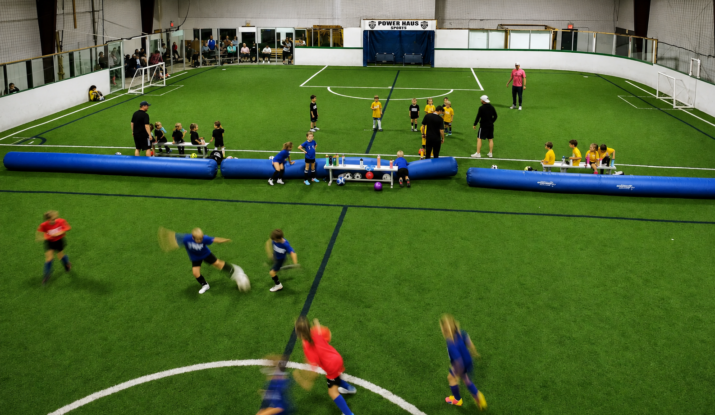
Illinois athletes know how quickly weather can interfere with a training schedule. Around Columbia, cold winters, spring rain, summer heat, and unpredictable conditions can make outdoor fields difficult to rely on throughout the year.
Indoor turf fields give athletes a controlled place to practice without depending on outdoor field conditions. For local players, teams, and families, that can mean more consistent training, fewer weather-related interruptions, and a versatile space for developing sport-specific skills.
What local athletes should know
- Indoor turf makes year-round training possible even when Southern Illinois weather limits outdoor practices.
- A consistent playing surface can help athletes focus on repetitions, technique, and skill development.
- Turf facilities can support training for multiple field and court-based sports, depending on how the facility is configured.
- Athletes from Columbia and surrounding Monroe County communities can benefit from having an indoor training option closer to home.
1. Indoor Turf Keeps Training Consistent Through Illinois Weather
Indoor turf keeps training consistent because athletes can practice without relying on dry fields, comfortable temperatures, or cooperative Illinois weather. Around Columbia, seasonal cold, rain, storms, heat, and wet outdoor surfaces can all interfere with planned practices.
That consistency matters for athletes who are working toward specific goals. Missing one practice might not seem significant, but repeated weather cancellations can make it harder to maintain a training routine.
Southern Illinois experiences distinct seasons, and each can create different challenges. Winter temperatures can limit comfortable outdoor training. Spring weather can leave grass fields wet or muddy. Summer heat can affect when athletes want to practice outside. Fall can bring another mix of rain and changing temperatures.
An indoor turf field gives athletes another option.
At Steamer’s Crew Powerhaus, we provide local athletes with an indoor environment where training does not have to stop simply because conditions outside are less than ideal. Athletes can focus on their work rather than wondering whether the field will be usable.
For families traveling from communities such as Waterloo, Millstadt, Dupo, or other parts of Monroe County and the Metro East, dependable indoor access can also make scheduling practices and training sessions easier.
2. Indoor Turf Supports More Focused Skill Development
Indoor turf supports focused skill development by giving athletes a consistent surface and environment for repeating movements, drills, and techniques. Instead of adjusting every session to mud, standing water, uneven grass, or changing temperatures, athletes can spend more time concentrating on the skills they came to improve.
Repetition is a major part of athletic development. Depending on the sport and available training setup, turf can provide space for activities such as footwork drills, agility work, throwing, catching, fielding, conditioning, and other sport-specific exercises.
The controlled environment can be especially useful during an athlete’s offseason. A baseball or softball player, for example, may want to continue working before outdoor fields around Columbia are ready for regular spring use. Athletes in other sports may want additional practice time outside their normal team schedule.
Indoor training does not replace every benefit of practicing outdoors. Instead, it gives local athletes another tool for maintaining their skills when an outdoor field is unavailable or inconvenient.
Local Field Observation
The practical advantage of indoor turf is straightforward: athletes know what type of environment they are walking into.
Outdoor conditions can change from one practice to another. Indoors, athletes can plan drills around the training goal rather than around the weather. That predictability can make it easier for players, coaches, and parents to use scheduled training time efficiently.
3. Indoor Turf Can Serve Athletes Across Multiple Sports
Indoor turf can be valuable for multiple sports because the open playing surface can accommodate many kinds of athletic drills and training activities. The exact uses depend on the facility’s setup, equipment, available space, and rules, but turf is not limited to athletes from a single sport.
That versatility is particularly helpful in an area like Columbia, where families may have children participating in different activities throughout the year.
An indoor turf environment may be useful for training involving:
- Speed, acceleration, and agility drills
- Footwork and change-of-direction exercises
- Throwing and catching practice
- Fielding and movement drills
- General athletic conditioning
- Individual or small-group skill work
- Team activities that fit the available space
Athletes should always choose drills that are appropriate for their sport, age, ability, and the facility’s permitted uses.
For local families, versatility can also make indoor turf relevant beyond one particular season. Instead of thinking of indoor training only as a winter solution, athletes can use it whenever they need a dependable place for focused work.
4. Indoor Turf Helps Athletes Make Better Use of Training Time
Indoor turf helps athletes make better use of scheduled training time because the session is less likely to be dictated by outdoor field conditions. When athletes arrive ready to practice, they can concentrate on completing planned drills rather than modifying an entire session because a field is muddy, wet, or uncomfortable.
That can be valuable for busy families throughout Columbia and neighboring Southern Illinois communities.
School, work, team practices, games, and family responsibilities already compete for space on the calendar. If an athlete only has certain windows available for additional training, dependable access becomes important.
Indoor facilities can also be useful when daylight is limited. During the colder months, the sun sets much earlier than it does during summer. An indoor environment removes daylight from the equation and allows training to take place according to facility availability rather than sunset.
For athletes who are serious about improvement, consistency and intentional practice can matter more than simply adding random hours of activity. A controlled training space makes it easier to arrive with a plan and use the available session for specific goals.
5. Indoor Turf Gives Local Athletes Another Option Close to Home
Indoor turf gives Columbia-area athletes another local training option, reducing the need to depend entirely on outdoor facilities or travel farther for every additional practice opportunity. Having choices nearby can make regular training more practical for athletes and families managing school, work, sports, and other commitments.
Columbia sits within the broader Metro East region, with communities such as Waterloo, Millstadt, Dupo, and Belleville all part of the area’s sports landscape. Families may regularly travel between communities for games, practices, tournaments, lessons, and other activities.
A local indoor training option can help fill the gaps between those commitments.
That does not mean athletes should train indoors exclusively. Outdoor fields remain essential for experiencing real game conditions, larger playing spaces, weather, and sport-specific environments. Indoor turf works best as another training resource that complements those experiences.
For many Illinois athletes, that flexibility is the real game-changer.
When Should an Athlete Consider Indoor Turf Training?
Athletes should consider indoor turf training when weather, field availability, daylight, or the need for focused repetitions makes outdoor practice difficult. It can be particularly useful during the Illinois offseason, after weather cancellations, or when an athlete wants additional practice outside regularly scheduled team activities.
Parents and athletes should consider what they actually want from a training session. If the goal is simply to stay active, many options may work. If the goal involves repeating particular movements or sport-specific drills, choosing an appropriate training environment becomes more important.
Athletes should also avoid treating every session as an opportunity to train as hard as possible. Rest, recovery, appropriate coaching, and age-appropriate workloads remain important parts of athletic development.
Common Mistakes Illinois Athletes Make With Offseason Training
The most common offseason training mistakes involve inconsistency, practicing without a clear purpose, and assuming more training is automatically better training. Indoor turf provides an opportunity to practice, but athletes still need to use that opportunity thoughtfully.
One mistake is waiting for perfect outdoor conditions. The consequence can be long gaps between meaningful practice sessions. A better approach is to have an indoor option available when Columbia weather makes outdoor training impractical.
Another mistake is arriving without a plan. Athletes can spend plenty of time moving without actually working on the skill they want to improve. A better approach is to identify a small number of goals for each session.
A third mistake is ignoring recovery. Indoor availability does not mean athletes should train every day. The better approach is to balance practice with appropriate rest and follow guidance from qualified coaches or healthcare professionals when necessary.
Indoor Turf vs. Outdoor Fields: Which Is Better?
Neither indoor turf nor outdoor fields are automatically better because they serve different training purposes. Indoor turf offers consistency and protection from weather, while outdoor fields provide exposure to the conditions and spaces athletes may encounter during actual competition.
For Columbia-area athletes, the most useful approach may be combining both when appropriate.
Indoor training can help athletes continue working during poor weather, limited daylight, or periods when outdoor fields are unavailable. Outdoor practice can then provide opportunities to apply those skills in a more game-like setting.
The choice should ultimately reflect the athlete’s sport, goals, season, and training plan.
Indoor Turf Training Around Columbia, Illinois
Indoor turf gives athletes in Columbia and nearby Southern Illinois communities a dependable option for training throughout the year. Families from Monroe County and surrounding Metro East communities can consider indoor practice when weather or field availability would otherwise interfere with training.
At Steamer’s Crew Powerhaus, we help provide a local environment where athletes can put their attention back where it belongs: on the work they came to do.
Explore indoor turf training options or contact us to learn about availability
What Happens When Athletes Lose Training Consistency?
Losing training consistency can make it harder for athletes to maintain routines and build on previous practice, particularly when repeated Illinois weather disruptions reduce opportunities to train. The issue is not one missed day. It is allowing cancellations and unavailable fields to repeatedly determine when meaningful practice happens.
For athletes with competitive seasons approaching, waiting until outdoor conditions improve can also reduce the amount of preparation time available.
Indoor turf provides an alternative rather than a guarantee of better performance. Athletes still need purposeful practice, appropriate instruction, effort, recovery, and realistic expectations.
Reduce weather-related interruptions by asking about indoor turf availability
FAQ About Indoor Turf Fields in Columbia, IL
Can athletes use indoor turf during winter in Columbia, IL?
Indoor turf is especially useful during winter because it provides a training environment that is not dependent on outdoor temperatures or field conditions. Columbia athletes can continue appropriate drills and practice activities indoors when cold weather makes outdoor sessions less practical, subject to facility availability, rules, and permitted activities.
Is indoor turf only useful for football or soccer players?
No, indoor turf can support training for multiple sports when the facility’s layout and rules accommodate the activity. Athletes may use turf for agility, footwork, throwing, catching, fielding, conditioning, and other drills. Local athletes should confirm that their intended activity and equipment are permitted before scheduling a session.
Why is indoor turf helpful during Southern Illinois spring weather?
Indoor turf is helpful during spring because rain and wet ground can make outdoor grass fields difficult or inappropriate to use. Athletes around Columbia can move scheduled practice indoors rather than relying completely on outdoor field conditions, helping them maintain a more predictable routine as their competitive seasons approach.
Can indoor turf replace outdoor practice?
Indoor turf usually works best as a complement to outdoor practice rather than a complete replacement. Outdoor training exposes athletes to larger spaces, weather, natural surfaces, and game-specific conditions that an indoor facility may not reproduce. Indoor turf provides a dependable alternative for focused training when outdoor practice is unavailable.
Is indoor turf useful for athletes from outside Columbia?
Yes, indoor turf can be useful for athletes from nearby communities when the location and facility meet their training needs. Families in Waterloo, Millstadt, Dupo, Belleville, and elsewhere around Monroe County and the Metro East may consider indoor options as part of their regular or offseason sports schedules.
Does indoor turf guarantee better athletic performance?
No, training on indoor turf does not guarantee improved athletic performance. It provides a consistent place to practice, but results depend on factors such as training quality, coaching, effort, recovery, experience, and the athlete’s individual development. The primary advantage is having another environment available for purposeful practice.
When is the best time to use indoor turf in Columbia?
Indoor turf can be useful year-round, but it becomes especially valuable during cold weather, rainy periods, extreme heat, limited daylight, and outdoor field closures. Columbia athletes may also choose indoor training during an offseason or whenever they need a controlled space for drills that fit the facility.
What should athletes bring to an indoor turf session?
Athletes should bring equipment appropriate for their planned activity and follow the facility’s rules for footwear and sports equipment. Requirements can vary by facility and activity, so athletes and parents should confirm current policies before arriving rather than assuming that outdoor footwear or every type of equipment is permitted.
Keep Your Training Moving in Columbia, IL
Illinois weather does not always cooperate with an athlete’s schedule. Indoor turf gives Columbia-area players another way to stay consistent, practice with purpose, and make productive use of their available training time.
Build a More Consistent Training Routine Close to Home
We provide a local indoor training option for athletes who do not want outdoor conditions deciding every practice day.